
 By Adrian Pascual•Hiring insight•Published
Skills-Based Hiring Criteria: Practical Examples for HR Teams
Skills-based hiring replaces degree requirements and credential proxies with measurable, observable evidence of what a candidate can actually do. Here are ready-to-use examples of skills-based hiring criteria you can drop into job postings and scorecards today.
Core criteria examples (hard skills):
- Data analysis: Interprets a dataset of 500+ rows in Excel or Google Sheets to identify a trend and present findings in a summary table
- Written communication: Drafts a clear, error-free 300-word client-facing email explaining a policy change without supervision
- SQL querying: Writes a JOIN query across two tables to return a filtered result set within a defined time limit
- Technical troubleshooting: Diagnoses and resolves a simulated Tier 1 IT ticket (network connectivity issue) within 15 minutes
- Project coordination: Builds a project timeline with dependencies using a standard PM tool (Asana, Jira, or equivalent)
- Customer de-escalation: Responds to a scripted angry-customer scenario and reduces hostility within three exchanges
Core criteria examples (soft skills, per NACE career-readiness competencies):
- Problem solving: Identifies the root cause of a case-study scenario and proposes two ranked solutions with trade-offs
- Teamwork: Describes a specific situation where they resolved a conflict within a cross-functional group, naming their exact role
- Professionalism: Responds to a time-pressure simulation without escalating tone or abandoning the task
Mini scoring rubric (copy into your ATS or scorecard):
| Proficiency Level | Anchor Behavior |
|---|---|
| Basic (1) | Completes the task with significant prompting or errors; output requires rework |
| Proficient (2) | Completes the task independently with minor errors; output is usable with light editing |
| Advanced (3) | Completes the task independently, accurately, and efficiently; output exceeds the stated standard |
To decide whether a skill is core or great-to-have, ask one question: Can this person do the job on day one without it? If the answer is no, it is core; if it can be trained in 30–90 days, it is great-to-have.
Key Takeaways
Skills-based hiring works when criteria are observable, scoring is standardized, and the assessment method matches the skill being measured.
| Point | Details |
|---|---|
| Start with observable criteria | Write every criterion as: observable action + context + measurable outcome, not a trait or credential. |
| Weight core skills at 60–80% | Allocate most of the assessment score to day-one-required skills; reserve 20–40% for great-to-have skills. |
| Calibrate raters before the pilot opens | A two-hour calibration session before the first candidate is assessed prevents a full-level scoring gap between raters. |
| Track time-to-competency and 12-month retention | These two metrics, pulled from HRIS data, show whether skills-based hires actually outperform credential-based ones. |
| Evy automates structured scoring at scale | Evy's platform combines rubric-based scoring, audit logs, and real-time eye tracking to keep assessments consistent and defensible. |
Table of Contents
- What is skills-based hiring, and what does it replace?
- How do you separate core skills from great-to-have skills?
- Copy-paste skills-based hiring criteria by role and level
- How to write measurable, observable skills criteria
- Which assessment methods map best to which criteria?
- A practical pilot plan for implementing skills-based hiring
- Bias mitigation, EEO compliance, and auditability
- KPIs and metrics that show skills-based hiring is working
- Research-backed best practices for scaling and auditing assessments
- Sample templates and a scoring rubric you can copy now
- What most teams get wrong in their first pilot
- Evy brings structure and integrity to skills-based screening at scale
- Sources
What is skills-based hiring, and what does it replace?
Skills-based hiring, sometimes called skills-first hiring, is a structured approach to candidate evaluation that prioritizes demonstrated competencies, observable behaviors, and performance evidence over proxies such as four-year degrees, job titles, or years of experience. The U.S. Department of Labor's Skills-First Hiring Starter Kit defines the practice as identifying the specific skills a job requires, then designing every step of the hiring process to surface and measure those skills directly.
What it replaces is a credentialing shortcut. For decades, hiring managers used degrees and brand-name employers as filters because they were easy to screen at volume. The problem is that those filters correlate weakly with actual job performance and systematically exclude candidates from non-traditional backgrounds. Hiring Lab research shows a measurable trend away from strict educational requirements in job postings, and the data on applicant pool diversity supports why: removing unnecessary degree requirements expands the pool and tends to increase representation among candidates who have the skills but not the credential.
The business case is straightforward. BLS JOLTS data consistently shows millions of open positions across the U.S. economy, meaning employers who filter on credentials rather than skills are narrowing their search in a tight labor market. Skills-based hiring widens the sourcing funnel while improving the signal quality of each candidate who advances.
How do you separate core skills from great-to-have skills?
The distinction is operational, not aspirational. A core skill is one the person must bring to the role on day one because the job cannot function without it. A great-to-have skill is one that adds value but can be developed through onboarding, mentoring, or short-form training within 30–90 days.
The decision rule: map each skill to a specific job duty, then ask whether a new hire who lacks it would fail to perform that duty in the first 30 days. If yes, it is core. If the duty can be covered by a teammate or learned quickly, it is great-to-have.
Weight your scoring accordingly: allocate 60–80% of the total assessment score to core skills and the remaining 20–40% to great-to-have skills. This keeps hiring decisions anchored to day-one readiness while still rewarding candidates who bring additional depth.
Copy-paste skills-based hiring criteria by role and level
These templates follow the observable-behavior format. Each criterion names what the candidate does, in what context, and to what standard. Label each as C (core) or G (great-to-have) in your scorecard.
Entry-level customer service representative
- C Handles a scripted inbound complaint call and reaches a resolution or escalation decision within 5 minutes
- C Writes a follow-up email summarizing the call outcome with no factual errors
- C Identifies the correct knowledge-base article for three simulated customer questions
- G Navigates a CRM to log a case without instruction after a 10-minute demo
- G Upsells a relevant product in a role-play scenario without prompting
Mid-level product manager
- C Prioritizes a backlog of 10 features using a scoring framework (RICE or equivalent) and explains the rationale
- C Writes a one-page PRD for a hypothetical feature that includes user story, acceptance criteria, and success metric
- C Facilitates a 20-minute mock sprint planning session with a cross-functional group
- G Presents a competitive analysis of three market alternatives with a clear recommendation
- G Defines an A/B test hypothesis and outlines the measurement plan
Software engineer (mid-level)
- C Completes a timed coding exercise (language of choice) that returns correct output for all test cases
- C Reviews a peer's code sample and identifies at least two bugs or improvement areas with written comments
- C Explains the trade-off between two architectural approaches for a described system requirement
- G Writes unit tests covering edge cases for a provided function
- G Documents a technical decision in a short architecture decision record (ADR)
IT support specialist (Tier 1/2)
- C Resolves a simulated password reset and account lockout ticket within 10 minutes using a standard ticketing system
- C Walks a non-technical user through a VPN connection issue over a scripted call
- C Escalates a ticket correctly after identifying it exceeds Tier 1 scope, with a complete handoff note
- G Identifies a recurring issue pattern across three sample tickets and proposes a knowledge-base article
Sales development representative
- C Delivers a 90-second cold-call pitch for a described product without reading from a script
- C Handles two common objections (pricing, timing) in a role-play scenario
- C Writes a personalized outbound email for a named prospect using provided company context
- G Builds a target account list of 10 companies using LinkedIn Sales Navigator or equivalent
Operations coordinator
- C Builds a project tracker for a described 8-week initiative with milestones, owners, and dependencies
- C Identifies a process bottleneck in a described workflow and proposes one measurable improvement
- C Drafts a vendor communication requesting a revised delivery timeline
- G Creates a basic process map (swimlane or flowchart) for a described cross-team handoff
How to write measurable, observable skills criteria
Vague criteria produce inconsistent scoring. "Strong communicator" means something different to every rater. The fix is a three-part formula:
Observable action + context + measurable outcome
Example: "Drafts [observable action] a client-facing status update email [context] with no factual errors and a reading grade level of 8 or below [measurable outcome]."
Every criterion you write should pass this test: could two different raters watch the same candidate and agree on whether the standard was met? If not, the criterion needs more specificity.
Three-level proficiency rubric (anchor behaviors):
- Basic (1): The candidate attempts the task but requires significant guidance, makes material errors, or produces output that cannot be used without substantial rework.
- Proficient (2): The candidate completes the task independently. Output meets the stated standard with minor corrections needed.
- Advanced (3): The candidate completes the task independently, accurately, and ahead of the expected pace. Output exceeds the stated standard or demonstrates a method the rater had not anticipated.
Anchor behaviors are the key. Without them, raters drift toward their own mental models of "good enough," and subjectivity returns through the back door. TechTarget's reporting on skills-based hiring makes this point directly: poorly defined rubrics reintroduce the same bias that skills-based hiring was designed to remove.
Pro Tip: Avoid naming specific tools or vendors in your criteria (e.g., "uses Salesforce" instead of "uses a CRM"). Tool-specific phrasing screens out qualified candidates who have equivalent experience on a different platform and can learn your stack quickly. Use the function, not the brand name.
Which assessment methods map best to which criteria?
Choosing the right method for each criterion is as important as writing the criterion itself. A structured interview question measures different things than a work sample, even when both target the same skill.
| Assessment Method | Best for Measuring | Validity Signal | Time / Effort |
|---|---|---|---|
| Work sample / take-home | Hard skills, output quality | High | Medium (candidate) / Low (rater) |
| Live simulation | Decision-making, communication under pressure | High | High (both) |
| Skills test (timed) | Technical proficiency, accuracy | High for defined skills | Low (candidate) / Low (rater) |
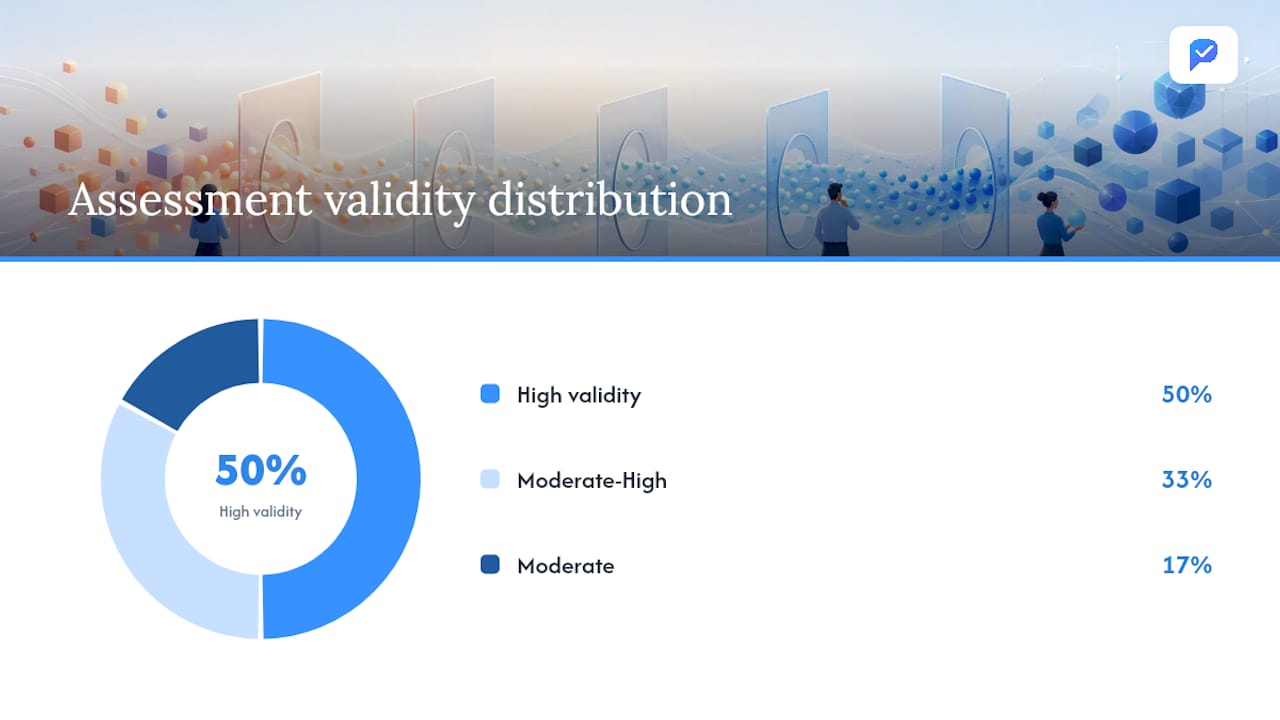
| Structured interview | Behavioral competencies, soft skills | Moderate-High | Medium (both) |
| Portfolio review | Creative, analytical, or technical output history | Moderate | Low (candidate) / Medium (rater) |
| Case study | Strategic thinking, problem framing | Moderate-High | High (candidate) / Medium (rater) |
Research on alternative predictors of job performance consistently places work samples and structured interviews among the highest-validity selection methods, outperforming unstructured interviews and educational credentials by a meaningful margin.
Fairness and accessibility considerations:
- Set a realistic time limit for take-home exercises (2–4 hours maximum) and state it clearly; open-ended tasks disadvantage candidates with caregiving responsibilities or second jobs
- Provide the same brief and the same materials to every candidate for a given role
- For live simulations, use a standardized scenario script so rater variation comes from the candidate's response, not from how the rater framed the prompt
- Offer accommodations proactively (extended time, alternative formats) before candidates have to ask
Pro Tip: For any assessment that involves written or verbal responses, consider whether a candidate could use an AI tool to generate the answer without demonstrating the underlying skill. Design exercises that require real-time reasoning, role-specific context, or live interaction to preserve assessment integrity. Evy's screening methods guide covers this trade-off in detail.
A practical pilot plan for implementing skills-based hiring
A 6–12 week pilot on a single role is the most reliable way to build internal confidence and surface process gaps before scaling. MIT Sloan's guidance frames skills-based hiring as a long-term talent strategy rather than a one-time fix, which means the pilot's real output is a repeatable process, not just a filled seat.
Six-week pilot checklist:
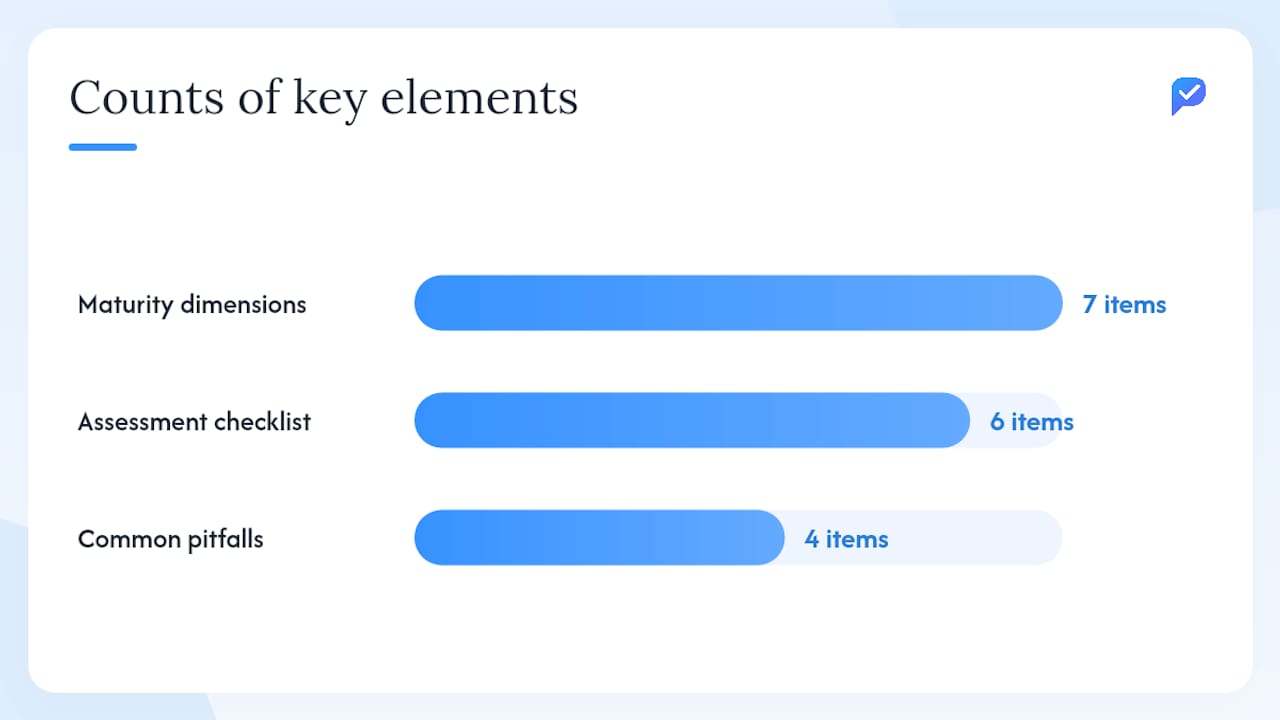
- Weeks 1–2: Select one high-volume or high-turnover role. Conduct a job analysis with the hiring manager to identify 4–6 core skills tied to specific job duties. Document the link between each skill and a day-one performance requirement.
- Week 2–3: Write measurable criteria using the observable action + context + outcome formula. Remove degree requirements unless a license or certification is legally required for the role.
- Week 3–4: Build two to three assessment exercises (one work sample, one structured interview guide with behavioral anchors). Pilot the exercises internally with a current employee in the role to calibrate difficulty and time estimates.
- Week 4–5: Train raters on the scoring rubric. Run a calibration session where two raters independently score the same sample response, then compare and discuss discrepancies.
- Weeks 5–8: Run the pilot with live candidates. Score every candidate on the same rubric. Collect rater notes.
- Weeks 8–12: Evaluate outcomes against baseline metrics (time-to-fill, offer acceptance, rater confidence). Adjust criteria weights or assessment formats based on what the data shows.
Stakeholder map: The hiring manager owns the job analysis and criterion validation. Talent acquisition owns the process design and candidate communication. Legal or compliance reviews criteria for adverse impact risk. A DEI lead reviews phrasing and assessment design for accessibility. Learning and development advises on what is genuinely trainable versus what must be present at hire.
Cost considerations: The largest cost in a pilot is internal time, not technology. A job analysis and rubric-building session typically runs 4–8 hours of combined hiring manager and TA time. Rater training adds another 2–3 hours. Assessment platform costs vary by vendor and volume; screening automation tools can reduce per-candidate review time significantly once the rubric is built. Budget the internal hours first; they are the constraint most teams underestimate.
Skills matching also has implications beyond a single hire. Maintaining a skills map across roles supports internal mobility and workforce planning, which is where the long-term ROI of skills-based practices tends to accumulate.
Bias mitigation, EEO compliance, and auditability
Skills-based hiring reduces certain bias vectors by design, but it does not eliminate them automatically. The structure has to be maintained at every step.
Practical mitigation steps:
- Use standardized scoring rubrics for every candidate; never score from memory or general impression after the fact
- Conduct blind resume review for nonessential information (graduation year, address, name where legally permissible) before the skills assessment stage
- Use diverse interview panels; a single rater's blind spots become the process's blind spots
- Separate the skills assessment score from the resume review score so neither contaminates the other
- Document the job analysis that ties each criterion to a specific, essential job duty
Legal guardrails: Under Title VII of the Civil Rights Act and the Uniform Guidelines on Employee Selection Procedures (UGESP), any selection criterion that produces adverse impact on a protected class must be validated as job-related and consistent with business necessity. Skills-based criteria that are directly tied to observable job duties and scored on standardized rubrics are generally more defensible than credential requirements, but the documentation must exist. The Massachusetts Skills-Based Hiring Policy offers a policy-backed model for how to structure that documentation.
Compliance checklist for auditability:
- Job analysis on file, signed by the hiring manager, linking each criterion to a specific job duty
- Scoring rubric with anchor behaviors documented before the first candidate is assessed
- All candidate scores recorded in the ATS with rater ID and date
- Adverse impact analysis run at each stage (application, assessment, offer) at least quarterly
- Accommodation requests and responses documented separately from the scoring record
- Assessment materials version-controlled so you know which rubric applied to which cohort
AI-assisted screening tools can support auditability by generating consistent transcripts, structured scoring outputs, and timestamped records that are harder to reconstruct manually after the fact. The integrity of the process depends on the consistency of the record.
KPIs and metrics that show skills-based hiring is working
Measuring the impact of a skills-based pilot requires tracking outcomes at multiple time horizons, not just time-to-fill.
Pro Tip: Pair your ATS pipeline data with your HRIS performance data from the start of the pilot. If you wait until the end to connect the two systems, you lose the ability to trace a hire's performance back to their assessment score, which is the most valuable signal the pilot can produce.
Automated screening platforms make this tracing easier by storing structured assessment scores alongside candidate records, so the correlation between assessment performance and post-hire outcomes is calculable rather than anecdotal.
Research-backed best practices for scaling and auditing assessments
The evidence base for skills-based hiring is strong, but the implementation record is mixed. The gap between the two is almost always execution quality.
JFF's employer journey map identifies seven maturity dimensions: job requirements, sourcing strategies, candidate assessment, hiring protocols, post-hire support, advancement opportunities, and organizational culture. Most employers who struggle with skills-based hiring have addressed the first two dimensions (rewriting job descriptions, sourcing differently) but have not built the assessment infrastructure or the post-hire feedback loop that makes the system self-correcting.
Common pitfalls and how to avoid them:
- Over-engineering assessments: A four-hour take-home exercise for a Tier 1 support role will reduce your applicant pool and introduce socioeconomic bias. Match assessment length to role complexity.
- Inconsistent scoring: Without rater calibration sessions, two raters scoring the same response can differ by a full proficiency level. Run calibration before every new cohort.
- Criterion drift: Hiring managers sometimes add criteria mid-process based on a strong candidate they have already met. Lock criteria before the first candidate is assessed.
- Ignoring internal mobility: MIT Sloan's research notes that skills maps built for external hiring are often never applied to internal talent, which is a missed opportunity for retention and advancement.
Assessment audit checklist:
- All criteria documented and version-controlled before the process opens
- Rater training completed and calibration session on record
- Adverse impact analysis scheduled at defined intervals
- Accommodation process documented and communicated to candidates
- Assessment materials reviewed for language that could disadvantage non-native English speakers or specific demographic groups
- Scoring records retained per EEOC recordkeeping requirements (generally one year for private employers, two years for federal contractors)
Reducing interviewer subjectivity through structured scoring and automated transcripts is one of the most practical ways to keep the audit trail clean without adding significant administrative burden.
Sample templates and a scoring rubric you can copy now
The Mass.gov Skills-Based Hiring Toolkit and the DOL Skills-First Hiring Starter Kit both include downloadable templates for job descriptions, structured interview guides, and scoring forms. Both are free and designed for immediate adaptation.
Job criteria template (copy and adapt):
- Role: [Title]
- Core skill 1: [Observable action] + [context] + [measurable outcome] — Assessment method: [work sample / structured interview / skills test]
- Core skill 2: [Same format]
- Great-to-have skill 1: [Same format] — Assessment method: [portfolio / case study]
Inline rubric example (customer de-escalation, customer service role):
| Score | Anchor Behavior |
|---|---|
| 1 – Basic | Candidate acknowledges the complaint but escalates immediately without attempting resolution; tone becomes defensive |
| 2 – Proficient | Candidate acknowledges the complaint, asks one clarifying question, and offers a resolution within the scripted scenario |
| 3 – Advanced | Candidate acknowledges, de-escalates tone within the first exchange, offers a resolution, and confirms the customer's satisfaction before closing |
Assessment protocol checklist:
- Brief sent to all candidates at least 24 hours before the assessment
- Identical scenario materials provided to every candidate
- Rater scorecard completed within 24 hours of the assessment
- Scores entered into the ATS before the next stage decision is made
- Candidate notified of outcome within the stated timeline
What most teams get wrong in their first pilot
The most common surprise in a first skills-based hiring pilot is not the assessment design. It is the scoring. Teams spend weeks writing criteria and building exercises, then discover in week five that two raters scored the same candidate a full level apart on the same rubric. That gap is not a rubric problem; it is a calibration problem, and it is fixable with a single two-hour session before the pilot opens.
The second surprise is how quickly hiring managers revert to credential proxies when a strong candidate appears mid-process. "She went to a great school" or "He has 10 years at a big company" starts to feel like a tiebreaker. It is not. It is the old system reasserting itself. The rubric score is the tiebreaker, and it has to be treated as such by everyone in the room.
Standardized scoring is the single most important structural change a team can make. Not the criteria, not the assessment format, not the platform. The rubric, applied consistently, by calibrated raters, every time. Everything else is secondary.
For teams running assessments at volume, platforms like Evy that combine structured interview flows with automated scoring and audit logs make that consistency far easier to maintain across dozens or hundreds of candidates simultaneously.
Evy brings structure and integrity to skills-based screening at scale
Skills-based hiring works when the assessment process is consistent, auditable, and resistant to the shortcuts that reintroduce bias. That is harder to maintain manually as volume grows.
Evy is built for exactly this: an AI interview platform that runs structured, skills-based assessments 24/7, scores candidates automatically against your rubric, and uses real-time eye tracking to flag when a candidate may be using AI assistance rather than demonstrating the skill themselves. Every session is recorded, transcribed, and scored, giving your team a complete audit trail without adding manual review time. ATS integration means scores flow directly into your existing pipeline, and the structured interview flow keeps every candidate on the same assessment path regardless of which recruiter is running the screen.
If you are ready to run skills-based assessments at scale without sacrificing consistency or integrity, start with Evy and see how the platform maps to the criteria and rubrics you have already built.
Sources
- Skills-Based Talent Practices: an Employer Journey Map — JFF
- Apprenticeship
- Mass
- Learn about skills-based job descriptions, candidate testing | TechTarget
- The why, what, and how of skills-based talent practices — MIT Sloan Management Review
- Career readiness defined — NACE
- Educational requirements in job postings — Hiring Lab