
 By Adrian Pascual•Hiring insight•Published
Interview Preparation Checklist for Hiring Managers
An interview preparation checklist for hiring managers is a structured guide that defines competencies, standardizes questions, and enforces consistent scoring to produce fair, defensible hiring decisions. Without this structure, interviews become subjective conversations that favor confident communicators over genuinely qualified candidates. The industry term for this approach is structured interviewing, and the research behind it is unambiguous: organizations that adopt it make measurably better hires. This article gives you a practical, step-by-step job interview checklist built around the latest best practices, from pre-interview planning through post-interview calibration.
1. Interview preparation checklist for hiring managers: the essential components
A structured interview preparation checklist starts before the candidate ever enters the room. The decisions you make in the planning phase determine whether the interview generates usable data or just confirms existing impressions.
Define the top five competencies for the role. Known as the Rule of 5, this practice forces you to identify the non-negotiable skills and behaviors the role demands before you write a single question. Competencies might include technical problem-solving, cross-functional communication, or data-driven decision-making. Defining them upfront prevents scope creep during the interview and keeps every evaluator focused on the same criteria.

Review candidate materials with intent. Read the resume, cover letter, and any pre-screening results before the interview. If you use AI-assisted screening tools, flag any inconsistencies or gaps noted in the system for follow-up. Reviewing materials in advance means you spend interview time probing, not orienting.
Prepare a structured interview guide. This guide contains your standardized question set, the competency each question targets, and the scoring rubric for each response. Structured interviewing, as defined by Google re:Work, requires vetted questions, comprehensive feedback mechanisms, standardized rubrics with behavioral anchors, and trained interviewers. Each element depends on the others.
Schedule the right amount of time. A 30 to 45-minute initial screen focused on alignment questions outperforms a 90-minute technical grilling session for early-stage evaluation. Candidates give more considered answers when the conversation feels measured rather than exhausting.
Send preparation information to candidates in advance. Share the interview format, the competency areas you will explore, and any logistical details at least 24 hours before the session. This reduces anxiety-driven performance variance and gives you a cleaner signal on actual capability.
Pro Tip: Align your full interview panel on evaluation criteria before the first candidate is interviewed. Misaligned panels produce conflicting scores that are nearly impossible to reconcile during debrief.
2. How to conduct the interview with structure and consistency
Execution is where most interview preparation guides fall short. Knowing what to ask is only half the challenge. How you open, sequence, and close the interview shapes the quality of data you collect.
Start every interview with a standardized introduction. Explain the format, the approximate timing, and the competency areas you will cover. This takes roughly two minutes and immediately signals to the candidate that the process is fair and organized. Candidates who understand the structure tend to give more complete, evidence-rich answers.
Open with alignment questions before moving into behavioral territory. Ask the candidate to confirm their understanding of the role, their current situation, and their core motivations. These questions surface misalignments early and prevent you from investing 40 minutes in a candidate who fundamentally misunderstands the position.
Cluster behavioral questions by competency using the STAR methodology (Situation, Task, Action, Result). The OPM interview guide recommends developing reflective, competency-based questions tied directly to job analysis, and avoiding any reliance on first impressions or non-job-related factors. Grouping questions by competency keeps the conversation coherent and makes scoring more precise.
Use probing and follow-up questions to push past rehearsed answers. If a candidate gives a vague response, ask: "What specifically did you do in that moment?" or "What was the measurable outcome?" Probing questions are the difference between surface-level impressions and genuine behavioral evidence. They also help you distinguish candidates who have real experience from those who have simply prepared well-sounding stories.
Take detailed notes during the interview, recording specific phrases and examples the candidate uses. Avoid evaluative language in your notes at this stage. Write what was said, not what you think it means. Reserve time at the end for the candidate's questions, and keep your tone conversational throughout to maintain engagement.
Pro Tip: Manual note-taking can fragment your attention at critical moments. AI-assisted note capture tools allow you to stay fully present in the conversation while preserving an accurate transcript for scoring.
3. Why scorecards and rubrics are both required for fair evaluation
Hiring managers frequently conflate scorecards and rubrics, or use one without the other. They serve distinct functions, and both are necessary for consistent candidate evaluation.
A scorecard defines what you measure: the specific competencies being evaluated and which interviewer is responsible for scoring each one. A rubric defines how you score: it provides behavioral anchors at each rating level so that a "3 out of 5" means the same thing to every evaluator on the panel. The table below illustrates the distinction.
| Tool | Function | Example |
|---|---|---|
| Scorecard | Defines competencies and assigns ownership | "Interviewer A scores problem-solving; Interviewer B scores communication" |
| Rubric | Provides behavioral anchors for each rating level | "A score of 4 requires the candidate to demonstrate X behavior with Y outcome" |
| Combined use | Produces defensible, comparable decisions | Reduces post-hoc rationalization and anchoring during debrief |
Research from the National Bureau of Economic Research found 26% better hire quality from structured hiring processes that combine scorecards with rubrics. That figure represents a substantial reduction in costly mis-hires, which typically cost organizations 30 to 50 percent of a role's annual salary to replace.
Assign specific competencies to specific interviewers rather than asking everyone to evaluate everything. When all panelists score all competencies, scores cluster toward consensus and individual signal is lost. Distributing ownership creates richer, more differentiated data.
Score immediately after the interview, within 30 minutes. Scoring while memory is fresh prevents recency bias and preserves the accuracy of behavioral evidence. Waiting until end of day means you are reconstructing impressions, not recording observations.
Pro Tip: Use anchored rubrics with three to five defined behavioral levels per competency. Rubrics without anchors invite gut-feel scoring, which defeats the purpose of structured evaluation entirely.
4. Critical post-interview steps that close the loop
The interview itself is only one phase of the process. What happens in the 48 hours after the conversation determines whether your structured approach holds or collapses into subjective debate.
Complete your scorecard with specific evidence immediately after the interview. Do not summarize impressions. Map each score to a direct quote or behavioral example from the candidate's responses. This practice, supported by structured debrief protocols, prevents anchoring effects and keeps decisions grounded in recorded evidence rather than personality impressions.
Schedule a calibrated debrief session with all interviewers before any hiring decision is made. In a calibrated debrief, each interviewer submits their scores independently before the group discussion begins. This prevents the most senior voice in the room from anchoring everyone else's ratings. The debrief then proceeds competency by competency, not candidate by candidate.
Use your anchored rubrics during the debrief to challenge scores that lack supporting evidence. If an interviewer rates a candidate a 5 on leadership but cannot cite a specific behavioral example, that score should be revisited. Pre-defined thresholds, such as requiring a minimum average score across core competencies, prevent post-hoc rationalization from overriding the data.
Communicate next steps to candidates within 48 hours of the interview. Delays in communication damage candidate experience and employer brand, particularly in competitive talent markets. Log all feedback, scores, and decisions in your applicant tracking system (ATS) for compliance and audit purposes.
5. How to reduce bias and improve fairness throughout the process
Bias in interviews does not always look like obvious prejudice. It often appears as a preference for candidates who communicate confidently, share the interviewer's background, or simply interviewed on a good day. Structured interviewing is the most reliable defense against these patterns.
Use the same standardized questions and rubrics for every candidate in the same role. Deviation from the standard question set, even with good intentions, introduces variables that make comparisons unreliable. The OPM's guidance on competency-based interviewing explicitly warns against relying on first impressions or non-job-related factors, which remain the most common sources of interviewer bias.
Require written evidence for every score. If a score cannot be supported by a specific candidate statement or behavior, it should not stand. This single rule eliminates a significant portion of gut-feel scoring. You can also reduce hiring bias at the screening stage by standardizing evaluation criteria before candidates are ever seen.
Monitor interviewer scoring patterns over time to detect inconsistencies. An interviewer who consistently scores all candidates high or low on a particular competency may need calibration training. Patterns like these are invisible without longitudinal data, which is one reason logging scores in an ATS matters beyond compliance.
Separate culture fit assessments from competency scoring. Culture fit is a legitimate consideration, but it should be evaluated through defined behavioral criteria, not a vague sense of whether you would enjoy working with someone. When culture fit is scored separately and explicitly, it becomes defensible. When it bleeds into competency scores, it introduces bias that is nearly impossible to detect.
"The biggest failure in interview quality is interviewer bias: relying on intuition or first impressions rather than structured questions and detailed note-taking tied to competencies." — OPM Interview Guide
Leverage AI tools to identify potential bias patterns in real-time. Platforms like Evy provide transcript analysis and attention pattern data that surface inconsistencies in how candidates are evaluated, giving hiring teams an objective layer of oversight that human reviewers alone cannot provide.
Key takeaways
A structured interview preparation checklist for hiring managers produces better hiring outcomes because it replaces subjective impressions with competency-based evidence, consistent scoring, and calibrated team decisions.
| Point | Details |
|---|---|
| Define competencies first | Identify the top five role-specific competencies before writing any interview questions. |
| Use both scorecards and rubrics | Scorecards assign ownership; rubrics define behavioral anchors. Both are required for fair evaluation. |
| Score within 30 minutes | Immediate post-interview scoring preserves accuracy and reduces recency bias. |
| Calibrate before deciding | Independent scoring followed by competency-by-competency debrief prevents anchoring effects. |
| Communicate within 48 hours | Prompt candidate communication protects employer brand and satisfies compliance requirements. |
What structured interviewing has taught me about hiring discipline
Most hiring managers I have spoken with treat interviews as conversations rather than data collection exercises. That instinct is understandable. Conversations feel natural, and structured processes can feel bureaucratic. But the evidence is clear: unstructured interviews produce inconsistent, biased results that cost organizations real money and real time.
The discipline of structured interviewing is not about removing human judgment from the process. It is about giving human judgment a reliable foundation. When you define competencies in advance, write questions tied to those competencies, and score against behavioral anchors, you are not constraining your instincts. You are giving them something concrete to react to.
The interviewers I have seen make the best hiring decisions are not the ones with the sharpest instincts. They are the ones who prepare the most thoroughly, take the most precise notes, and score the most honestly. Calibration sessions matter more than most teams realize. A single misaligned interviewer can skew a panel's decision in ways that only become visible months later, when a new hire underperforms in exactly the competency that interviewer rated too generously.
AI tools are changing this dynamic in meaningful ways. Automated note capture, transcript analysis, and real-time attention pattern monitoring give hiring teams data they simply could not access before. The goal is not to replace interviewer judgment but to augment it with evidence that holds up under scrutiny.
— Hudson
How Evy supports structured interviewing at scale
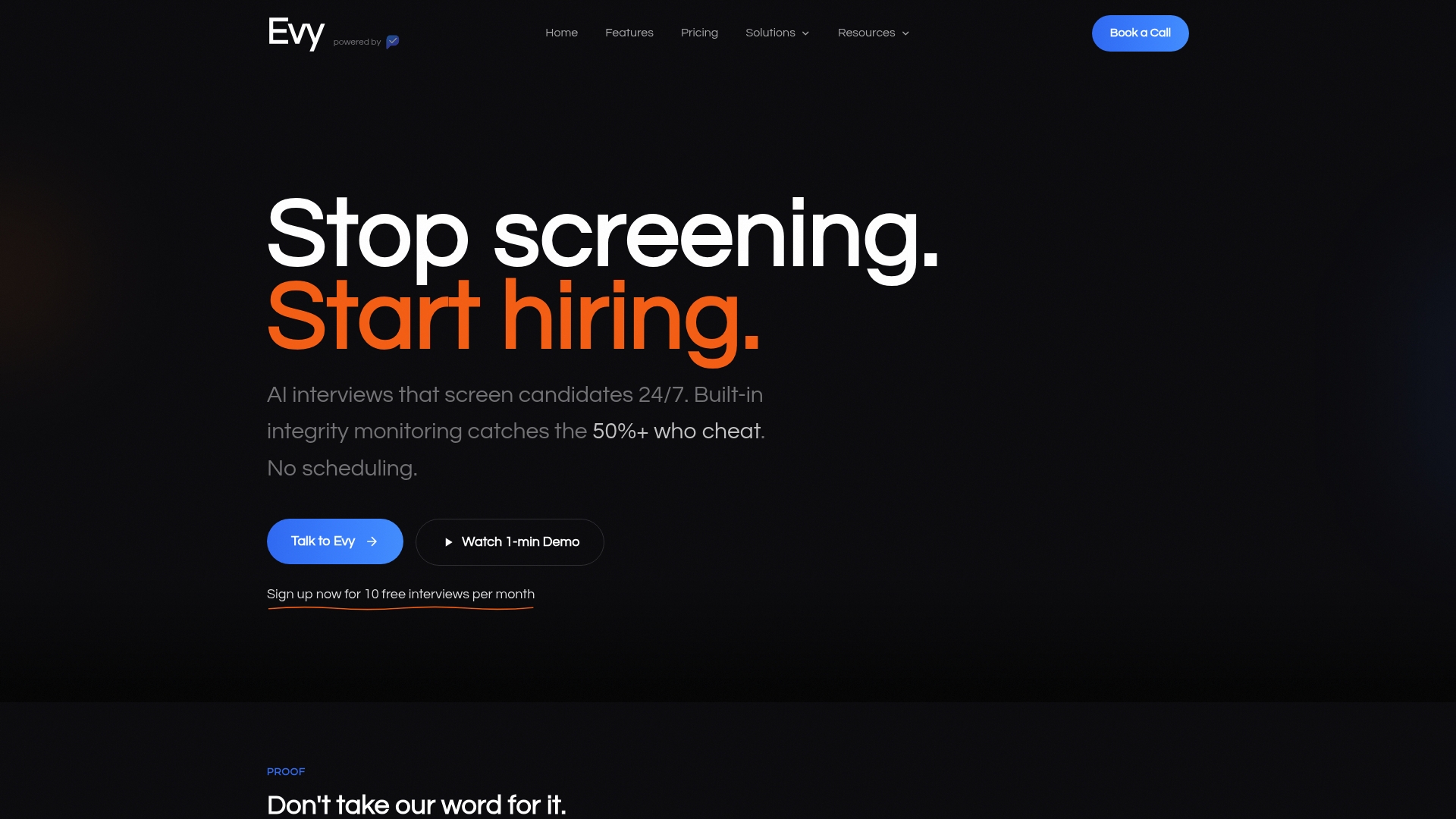
Evy is built for hiring managers who take interview integrity seriously. The platform combines AI-driven note capture, structured interview scorecards, and real-time eye tracking to detect when candidates rely on AI assistance during live interviews. Every session generates a transcript, attention pattern analysis, and competency-level scoring data that feeds directly into your debrief process. For teams running high-volume screening, Evy operates 24/7, so candidates can complete structured interviews on their schedule without sacrificing evaluation consistency. If you are building or refining your interview process, Evy for HR teams gives you the infrastructure to hire faster while staying compliant and fair.
FAQ
What is a structured interview preparation checklist?
A structured interview preparation checklist is a pre-interview planning tool that defines role-specific competencies, standardizes question sets, assigns scoring responsibilities, and establishes rubrics for consistent candidate evaluation. It is the foundation of evidence-based hiring.
How many competencies should a hiring manager evaluate per interview?
The Rule of 5 recommends defining no more than five core competencies per role. Evaluating more than five dilutes focus and produces less reliable scores across the panel.
When should hiring managers complete interview scorecards?
Scorecards should be completed within 30 minutes of the interview ending. Waiting longer increases recency bias and reduces the accuracy of behavioral evidence recorded during the session.
What is the difference between a scorecard and a rubric?
A scorecard defines what competencies are measured and who scores them. A rubric defines how each competency is scored using behavioral anchors at each rating level. Using both together produces 26% better hire quality compared to unstructured evaluation.
How can hiring managers reduce bias during interviews?
Use standardized questions for every candidate, require written evidence for every score, and conduct calibrated debriefs where interviewers submit scores independently before group discussion. Separating culture fit from competency scoring also removes a common source of undetected bias.