
 By Adrian Pascual•Hiring insight•Published
Why Interview Platform Choice Affects Hiring Outcomes
Most HR professionals assume the interview platform is a logistical detail. Pick something that works on most devices, sends automated reminders, and records responses. Done. But research increasingly shows that this assumption is wrong, and the cost of getting it wrong is measurable. Why interview platform choice affects outcomes goes far deeper than convenience. The medium shapes how candidates are perceived, how fairly they feel they're being evaluated, and whether top talent decides to continue in your process at all. Getting this right is one of the more underrated interview success factors in modern hiring.
Table of Contents
- Key takeaways
- Why interview platform choice affects assessment accuracy
- How platform choice shapes candidate experience
- Skills assessments versus traditional interviews
- Best practices for choosing a platform in 2026
- My perspective on technology and human connection
- How Evy supports fair, secure hiring at scale
- FAQ
Key takeaways
| Point | Details |
|---|---|
| Platform type affects fairness perceptions | Technology-mediated interviews consistently receive lower fairness ratings than face-to-face formats according to meta-analysis data. |
| One-way video alienates strong candidates | Impersonal asynchronous formats cause top talent withdrawal, directly damaging your employer brand and pipeline quality. |
| Screen-first models reduce bad hires | Integrating skills assessments before interviews cuts time-to-hire by 50% and significantly improves hire quality. |
| AI tools require active oversight | Regular bias audits and transparent AI policies are necessary to maintain candidate trust and legal compliance. |
| Platform flexibility improves engagement | Candidates who are offered format options and personalized communication show measurably higher engagement throughout the process. |
Why interview platform choice affects assessment accuracy
The assumption that all interview formats produce equivalent evaluations does not hold up under scrutiny. A meta-analysis of 31 samples found that technology-mediated interviews produce lower fairness perceptions and lower interviewer ratings compared to face-to-face interviews. Candidates rate the functionality of virtual platforms reasonably well. They rate the fairness much lower. That gap matters enormously when you are trying to attract people who have options.
Why does this happen? Face-to-face interviews offer a richer set of nonverbal signals. Interviewers can read posture, timing, energy, and micro-expressions with greater accuracy. When those cues are filtered through a screen, compressed by video codecs, or eliminated entirely in asynchronous formats, the evaluator is working with less information. The result is that ratings often become less reliable and more susceptible to superficial factors like lighting, background, or how polished someone looks on camera.
Research further shows that applicants with high nonverbal expectations perceive face-to-face interviews as significantly fairer, while candidates with lower nonverbal expectations accept video as a reasonable alternative. This is not a trivial distinction. In technical hiring, where candidates tend to be analytical and process-aware, many will actively notice and react to format choices.
AI-driven platforms introduce a separate set of concerns. Employers must audit AI tools regularly to mitigate bias and comply with evolving privacy laws. Without that oversight, AI scoring can amplify rather than reduce bias, particularly in evaluating speech patterns, vocabulary choices, or attention behaviors that correlate with demographic factors rather than actual job performance.
Pro Tip: Before selecting a platform, map your candidate profile. If you are hiring for senior or specialized roles where candidates are selective, a format that feels cold or opaque will cost you applicants before the process even begins.
How platform choice shapes candidate experience
The impact of interview platform on candidate experience is often underestimated until you start tracking drop-off rates. One-way video interviews can alienate top talent and introduce socioeconomic bias. Candidates who lack access to professional home office setups, high-speed internet, or high-quality cameras are immediately disadvantaged by formats that judge visual presentation as part of the evaluation.
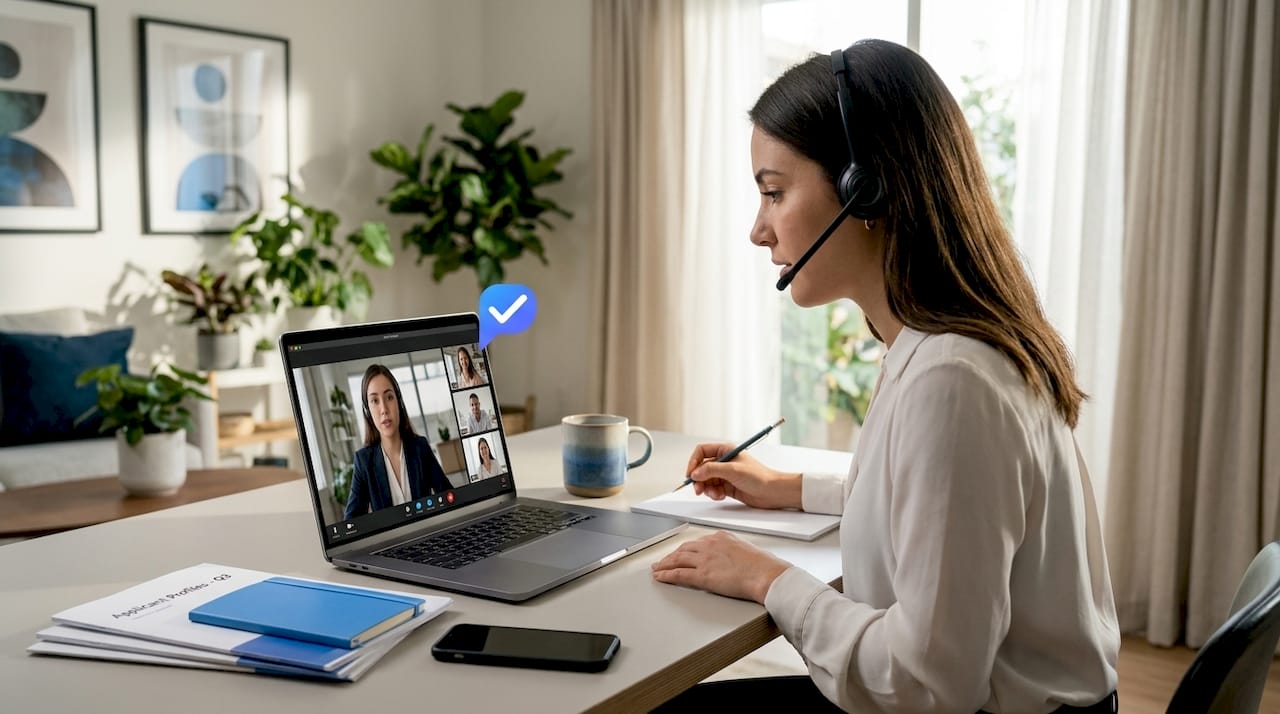
Beyond access issues, there is a perception problem. Candidates who record responses into a blank screen with no human present often describe the experience as dehumanizing. They have no sense of how their responses are landing. There is no feedback loop, no warmth, and no signal that the hiring team actually cares who they are as a person. For a strong candidate who is also fielding offers from competitors, that experience is often enough to exit the process.
There is also the question of AI transparency. Candidates are increasingly aware when AI tools are scoring their responses, and they have legitimate concerns about what criteria are being used. Reducing emphasis on superficial traits through transcript-focused AI evaluation does improve fairness, but only if candidates know and trust that this is how the system works. An opaque scoring process produces anxiety, not confidence.
"Candidates value options and personal introductions in digital processes. Interview platform selection outcomes improve meaningfully when candidates feel they are being treated as individuals, not just screened as data points."
Candidate engagement improves significantly when the process includes platform flexibility and personalized communication. Something as simple as a brief recorded introduction from a recruiter before the asynchronous interview portion can substantially change how candidates perceive the process. It signals that a real person is involved and that the company respects their time.
Skills assessments versus traditional interviews
One of the most significant shifts in how platform affects interview results is the growing adoption of screen-first hiring models. Rather than beginning with an interview and using it to drive all evaluation, 56% of employers now use assessments before interviews, resulting in a 50% reduction in time-to-hire. Among those organizations, 78% report improved quality of hire. That is not a marginal improvement. That is a structural change in how the process works.
The logic is straightforward. Interviews are expensive. Preparing for them, scheduling them, and conducting them consumes significant recruiter and hiring manager time. If a candidate cannot pass a relevant skills assessment, the interview was always going to be a waste of resources. Front-loading the skills evaluation filters the pipeline before the human interaction begins.
| Approach | Evaluation basis | Bias risk | Time efficiency | Hire quality signal |
|---|---|---|---|---|
| Traditional interview only | Subjective impression | High | Low | Moderate |
| Assessment-led screening | Demonstrated ability | Lower | High | Strong |
| Combined assessment + interview | Ability and culture fit | Moderate | High | Highest |
Stacking cognitive, skills, and psychometric assessments results in 91% of employers making quality hires. The multi-measure approach works because it captures complementary candidate traits that no single format can assess alone. A coding challenge tells you about technical ability. A structured interview tells you about communication and reasoning. Together, they produce a far more reliable picture.
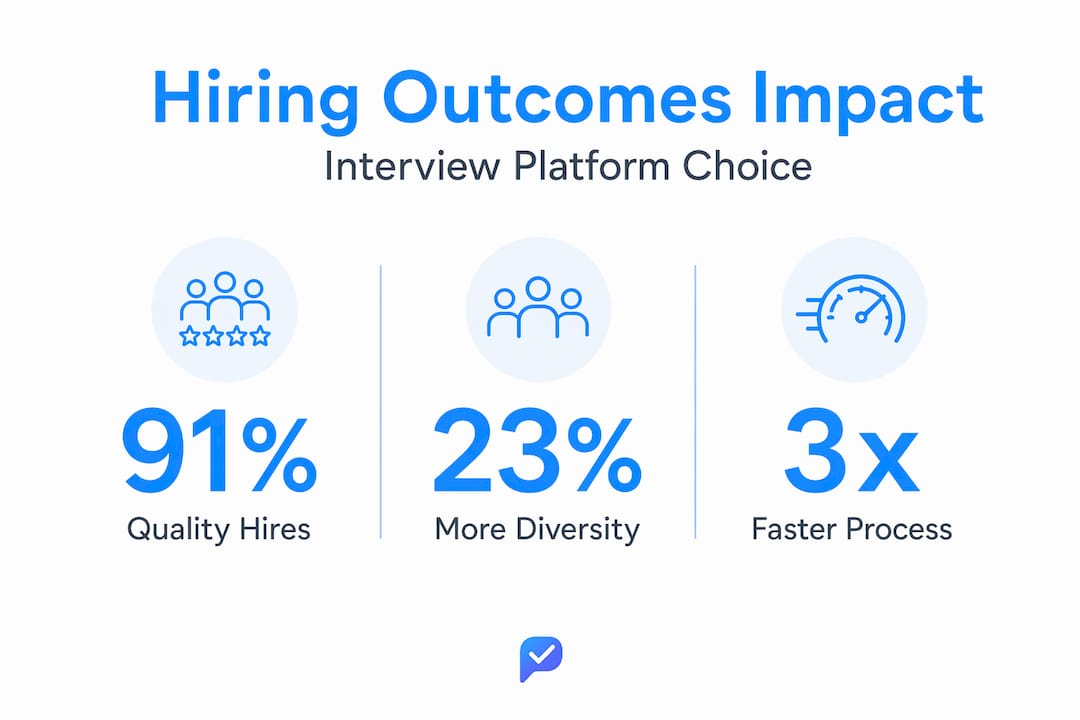
Skills-based screening also improves hiring diversity by 23% by shifting focus from credentials and interview polish to demonstrated ability. That matters both for equity and for talent pool expansion, particularly in tech roles where credential inflation has long narrowed the apparent candidate pool unnecessarily.
Pro Tip: If you are not already running a structured pre-screen assessment before live interviews, start there. Even a single well-designed skills test will materially improve the quality of your interview pipeline and save your hiring managers significant time.
Best practices for choosing a platform in 2026
Selecting the right interview software in 2026 means accounting for more variables than convenience and cost. Here is a structured approach for HR teams making this decision.
- Match format to role and candidate profile. A senior engineer with multiple offers will respond differently to an asynchronous one-way video than an entry-level applicant with fewer alternatives. Consider what the candidate experience communicates about your company's values before you finalize the format.
- Audit AI tools before deployment. AI interview tools carry legal and ethical risks that require proactive management. Review what the platform scores, how it scores, and whether those scoring dimensions have been tested for disparate impact across demographic groups. This is not optional in jurisdictions with AI hiring laws.
- Establish clear policies on candidate AI use. Organizations that prohibit candidate AI use while deploying AI interviewers risk creating a perceived double standard that damages trust and reputation. Define your position clearly and communicate it to candidates before the process begins.
- Build human touchpoints into digital processes. Even a fully automated screening workflow benefits from recruiter-recorded introductions, personalized follow-up emails, and a clear timeline. These elements signal respect and significantly reduce candidate drop-off.
- Review platform performance data regularly. Track completion rates, candidate satisfaction scores, and quality of hire metrics by platform type and format. The data will tell you whether your platform choices are serving your hiring goals or working against them.
Pro Tip: The risks and fairness considerations associated with AI screening tools are specific enough that a generalist review is often insufficient. Bring in HR legal counsel or a specialist for your initial audit.
My perspective on technology and human connection
I've worked with enough hiring teams to know that the pull toward full automation is understandable. Scheduling is painful. Screening is repetitive. The idea that a platform can handle all of it while you focus on final decisions is genuinely appealing. But I've also seen what happens when that automation goes too far, and I want to be direct about it.
The best candidates almost always have choices. When they encounter a process that feels cold, opaque, or purely transactional, they leave. Not because they can't handle technology, but because their experience of the process is their first evidence of what working at your company will feel like. An impersonal one-way video interview followed by silence communicates something real about your culture, whether you intend it to or not.
What I've learned is that the platforms that produce the best outcomes are the ones designed with the candidate's experience in mind alongside the employer's efficiency needs. That means tools that give candidates context, explain how their responses are evaluated, and offer some form of human contact early in the process. It also means platforms that take interview integrity seriously, because a process that can be easily gamed does not produce reliable signal regardless of how efficient it is.
My honest take: if you are choosing a platform primarily because it is the cheapest or the easiest to set up, you are optimizing for the wrong variable. The platform shapes the candidate's first impression of your organization and directly affects the validity of your evaluations. That deserves serious attention.
— Hudson
How Evy supports fair, secure hiring at scale
The challenges covered in this article are exactly what Evy was designed to address. Evy is the only AI interview platform with real-time eye tracking to detect candidates using AI assistance during interviews, which means the assessments you conduct actually reflect genuine candidate capability rather than coached or AI-generated responses.
Evy supports both live and asynchronous interview formats, integrates skills assessments directly into the workflow, and provides transparent scoring that candidates and hiring teams can trust. For HR teams hiring at scale, Evy screens around the clock and surfaces honest, qualified talent without requiring your recruiters to be available 24/7. Explore Evy's anti-cheat interview features to see how the platform balances security, fairness, and candidate experience in a single tool built for 2026 hiring realities.
FAQ
Why does interview platform choice affect hiring outcomes?
The platform determines how much nonverbal information is available, how fairly candidates perceive the process, and whether top candidates choose to complete it. Research shows technology-mediated interviews produce lower fairness perceptions and different rating patterns than face-to-face formats.
What is the risk of using one-way video interviews?
One-way video formats can feel impersonal and introduce socioeconomic bias based on candidates' home office setups and technology access. They are also associated with higher drop-off rates among qualified candidates who have other options.
How do skills assessments improve interview platform outcomes?
Placing assessments before interviews filters the pipeline based on demonstrated ability rather than interview performance alone. Organizations using this model report a 50% reduction in time-to-hire and significantly improved hire quality.
What legal risks come with AI interview tools?
AI interview platforms must be regularly audited for bias and compliance with privacy laws. Employers who use AI scoring without reviewing its criteria risk disparate impact claims and reputational damage if scoring dimensions correlate with protected characteristics.
How can HR teams reduce candidate drop-off in digital hiring processes?
Offering format flexibility, including personalized recruiter introductions, and communicating transparently about how AI tools evaluate responses all improve candidate engagement and reduce withdrawal from the process.